You groggily step off your last hopper plane after 45 hours of travel, climb into your first safari vehicle, and start the drive to your first camp. And all you can see are animals in every direction. Hundreds of wildebeest and zebra crossing the road right in front of your car. Ostriches on the horizon. Giraffes grazing the tops of the trees.
There’s a moment where you honestly pinch yourself and wonder if you’re dreaming. The only way I can describe it is walking into a National Geographic documentary and Disney’s Lion King at the same time. Two very different genres of entertainment, I know. I can’t think of any other way to put it.
That was our first hour in the Masai Mara. Then came thirteen nights, two countries, five camps, six bush planes, one border crossing, and two 9-year-olds who were promised lions.
They got lions. They also got a leopard sleeping in a tree, a cheetah mom hunting for her cubs, two white rhinos about 20 feet away with armed rangers between us, and three Great Migration river crossings, which were a bucket-list item for me.
This is the camp-by-camp version of our family safari: where we stayed, what we saw, and what I’d do the same or differently with kids. Some stops are getting their own deep-dive posts over the next few weeks.
Why we did Kenya and Tanzania in one trip
The Serengeti in Tanzania and the Masai Mara in Kenya are one ecosystem. For the animals there’s no border at all: the herds move back and forth freely, and the Mara River, where the famous crossings happen, runs through both. In late July and August the migration is usually somewhere in the northern Serengeti or the Mara, but nature is hard to time. Nobody can tell you which side of the border the herds will be on during your particular week.
So I spread us across the region, to intercept the animals wherever they were in their journey. For humans, crossing between the two countries takes most of a day. More camps also means more packing and more bush flights. With kids I’d normally say fewer moves, but for the chance to see both sides of the migration it was worth it.
| Nights | Where | Camp |
|---|---|---|
| Day 1 | Nairobi | Day tour only |
| 3 | Masai Mara, Kenya | JW Marriott Masai Mara Lodge |
| 3 | Naboisho Conservancy, Kenya | Encounter Mara |
| 2 | Ngorongoro, Tanzania | The Highlands |
| 2 | Eastern Serengeti, Tanzania | Namiri Plains |
| 3 | Northern Serengeti, Tanzania | Ubuntu Migration Camp |
Day 1: Nairobi
Our overnight flight landed at 6:40 AM. A meet-and-greet walked us through immigration and customs, and then we had a private vehicle and guide until our afternoon flight to the Mara.
We fed giraffes at the Giraffe Centre, where the boys felt the sandpaper texture of their tongues. Then Sheldrick’s elephant orphanage, which took home the trophy. We’d adopted two baby elephants before the trip, so the boys already knew their adoptees, Wamata and Olomunyak, and reached out to touch them when they came out for their bottles.
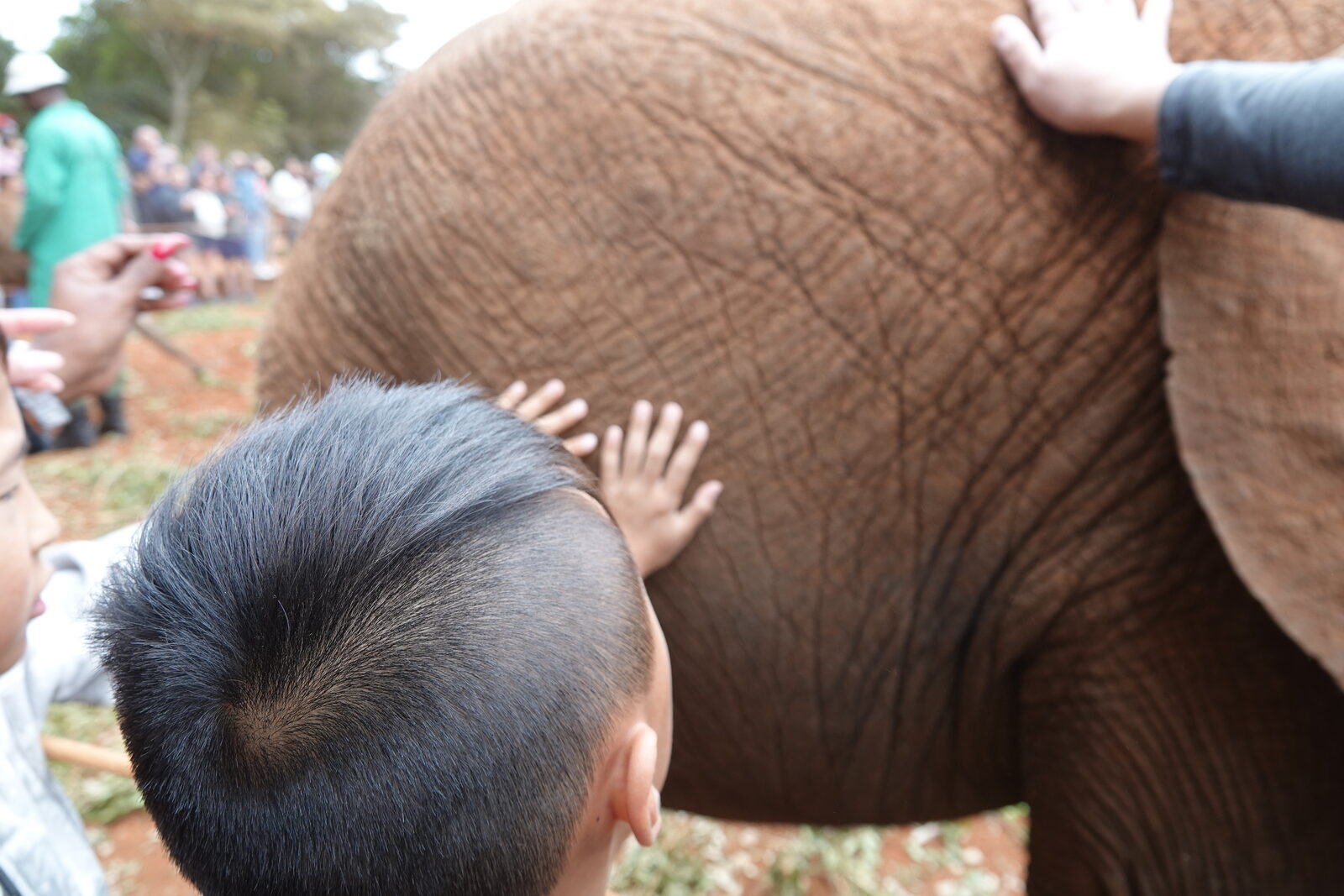
Both of these, and Giraffe Manor if you want to stay with the giraffes, need booking well ahead.
Masai Mara: JW Marriott (3 nights)
We booked JW Marriott Masai Mara Lodge on points. In the points world, it’s one of the big ones for anyone headed to East Africa: a luxury tented lodge with rave reviews, ridiculously expensive in cash, and we got it for less on points. Since our stay we’ve heard that good redemptions there are getting even harder to find. The cancellation policy is quite strict, and the award calendar can look impossible, but there are workarounds and tricks I’ve learned that make booking it less impossible. If you’re interested in redeeming points there, message me. (If points are new to you, here’s how we booked Japan on points.)
A tip I wish more people knew about: the lodge lends Canon camera bodies and professional lenses for your game drives, and an in-house editor goes through your shots afterward. You reserve a kit when you arrive, based on availability; we had no trouble getting one. Several of the photos in this series came from that camera.
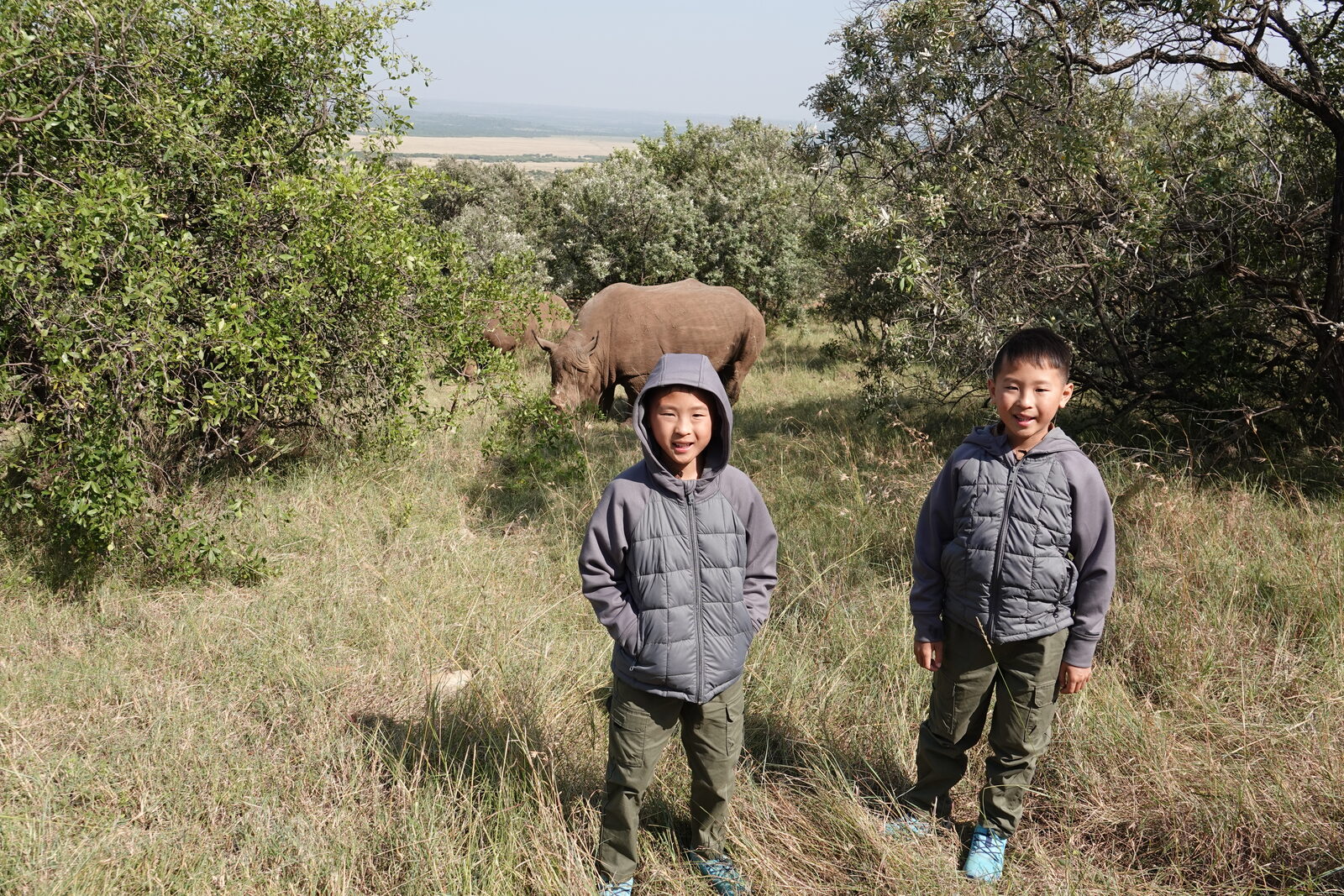
From JW Marriott we did two add-ons I’d recommend to almost any family: a morning walking up to white rhinos with armed rangers at the Ol Choro Oiroua Conservancy, and a sunrise hot air balloon where the basket launches lying on its side.
Naboisho Conservancy: Encounter Mara (3 nights)
I wrongly assumed Encounter Mara would just be an extension of the Masai Mara. It’s actually in the Mara Naboisho Conservancy, about two hours from where we’d been staying, and it runs by completely different rules. Off-roading is allowed, and only five vehicles can be at a sighting at once. We got close enough that a lioness backed into our car after a male lion chased her off a kill.
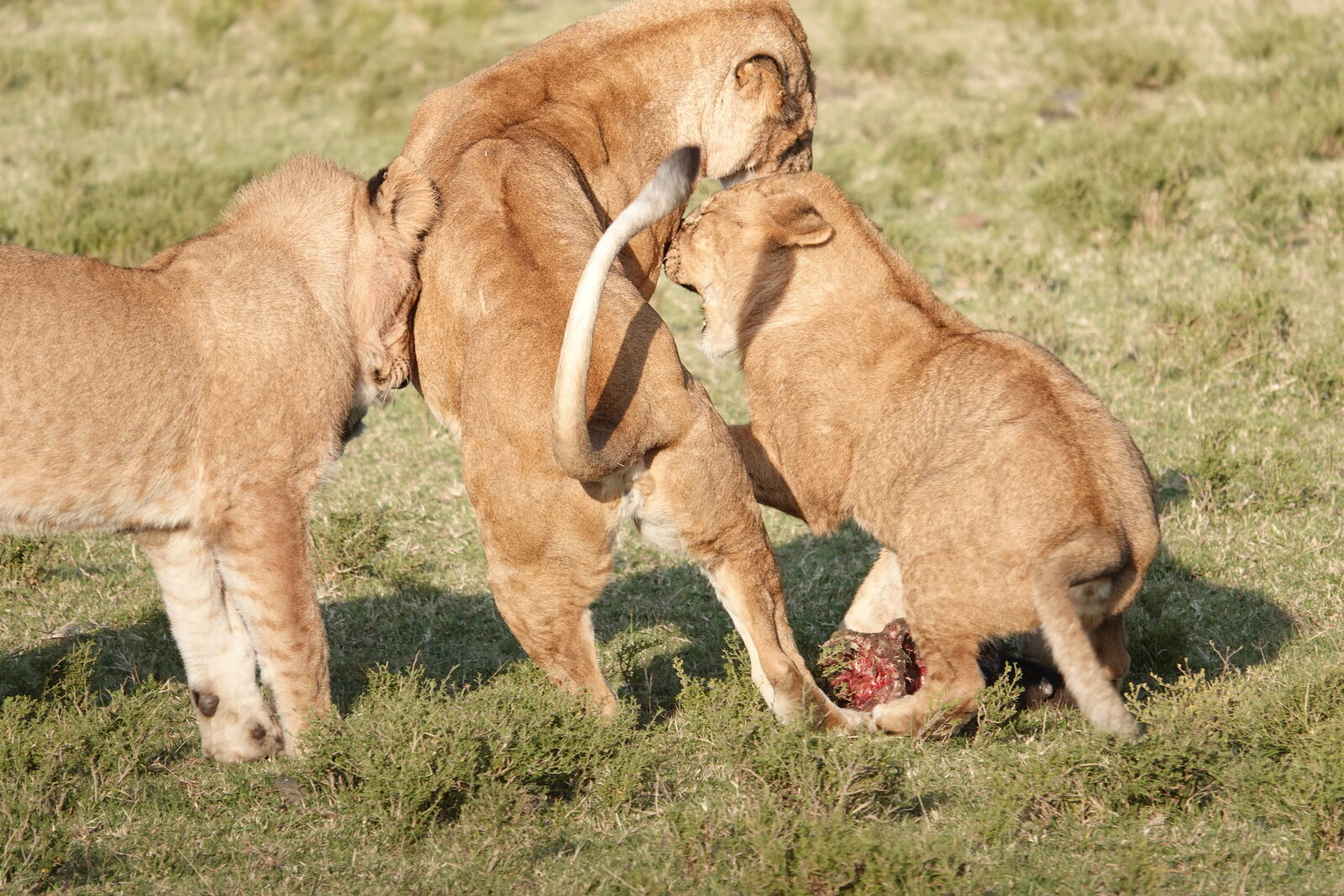
Naboisho is known for lions. Lions feasting. Lions sleeping. Lions mating. That’s why we talked to the boys before the trip about what they might see, and agreed on one rule they could never break.
The border day
You can stand with one foot in the Masai Mara and one in the Serengeti at the border markers, but your guide can’t drive you across. Getting from Kenya to Tanzania took us a bush flight, a drive through the Isebania/Sirari border post, another drive to the Tarime airstrip, and another flight: most of a day. Get your Kenya eTA and Tanzania eVisa before you go.
Ngorongoro: The Highlands (2 nights)
Your mileage may vary here. We’d heard amazing things about the Ngorongoro Crater, and for a lot of people it’s the highlight. The season matters. The crater’s animals live there year round, but the area is at its richest roughly December through March, when the migration herds calve on the plains nearby. July through September, when we went, is also the crater’s busiest season for vehicles.
I’d seen photos of Asilia’s Highlands camp and really wanted to sleep in the geodesic domes, so we went anyway. The camp sits high on the slopes of Olmoti, a neighboring volcano. It’s cold up there: bring a winter jacket for the evenings. The domes have space heaters, and we needed them.
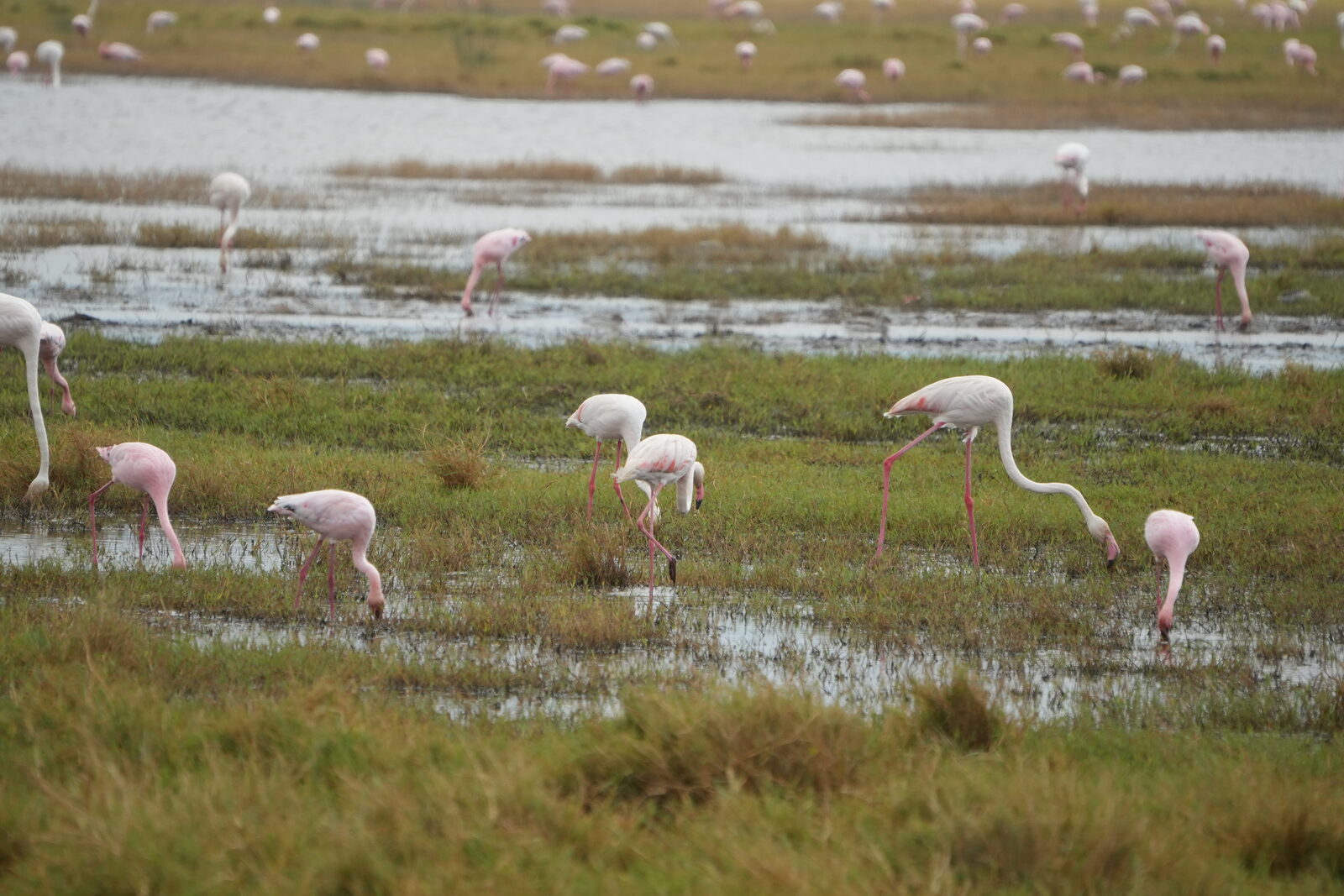
Getting down to the crater floor takes 45 to 60 minutes on very bumpy roads. Think Indiana Jones ride. Once you’re down, it feels like Jurassic Park: flamingos on the lakes, hippos in the watering holes. It’s a full-day drive, four to six hours. We saw lions, hippos, ostriches and lots of birds, but not the numbers we’d just seen in the Mara. Our one rhino was a speck in the distance, with safari vehicles lined up for a couple of minutes each at the binoculars.
The Highlands’ hikes to the Olmoti and Empakaai craters are 12 and up, so they’re off the table with younger kids.
Would I do it again? Between November and May, yes. On a trip built around the river crossings, I’d probably skip it. It costs two nights at a time of year when it isn’t at its best.
One practical note: flying in and out of Lake Manyara, you’ll likely stop for lunch at one of the big souvenir centers. Buy your gifts there; you won’t get much chance anywhere else. My souvenir was a loose tanzanite, which I later had made into a ring. The big carvings in ebony and African blackwood are beautiful and can be shipped home. What you won’t find is stuffed animals. When I asked our guide, he said, “It’s illegal here.” I clarified that I meant children’s toys, not taxidermy. He laughed, but the answer was still no. I guess when you’re surrounded by the real thing, you don’t need them.
Eastern Serengeti: Namiri Plains (2 nights)
Namiri Plains is what made me choose Asilia. It’s the name of both the camp and the area, and it’s big cat country. Before Asilia opened the camp in 2014, the plains had been closed to visitors for twenty years as a safe haven for cheetahs, which is why there are so many of them here. The plains are dotted with rock formations that look just like Pride Rock, and that’s exactly what you see on them: lion prides lounging in the sun.
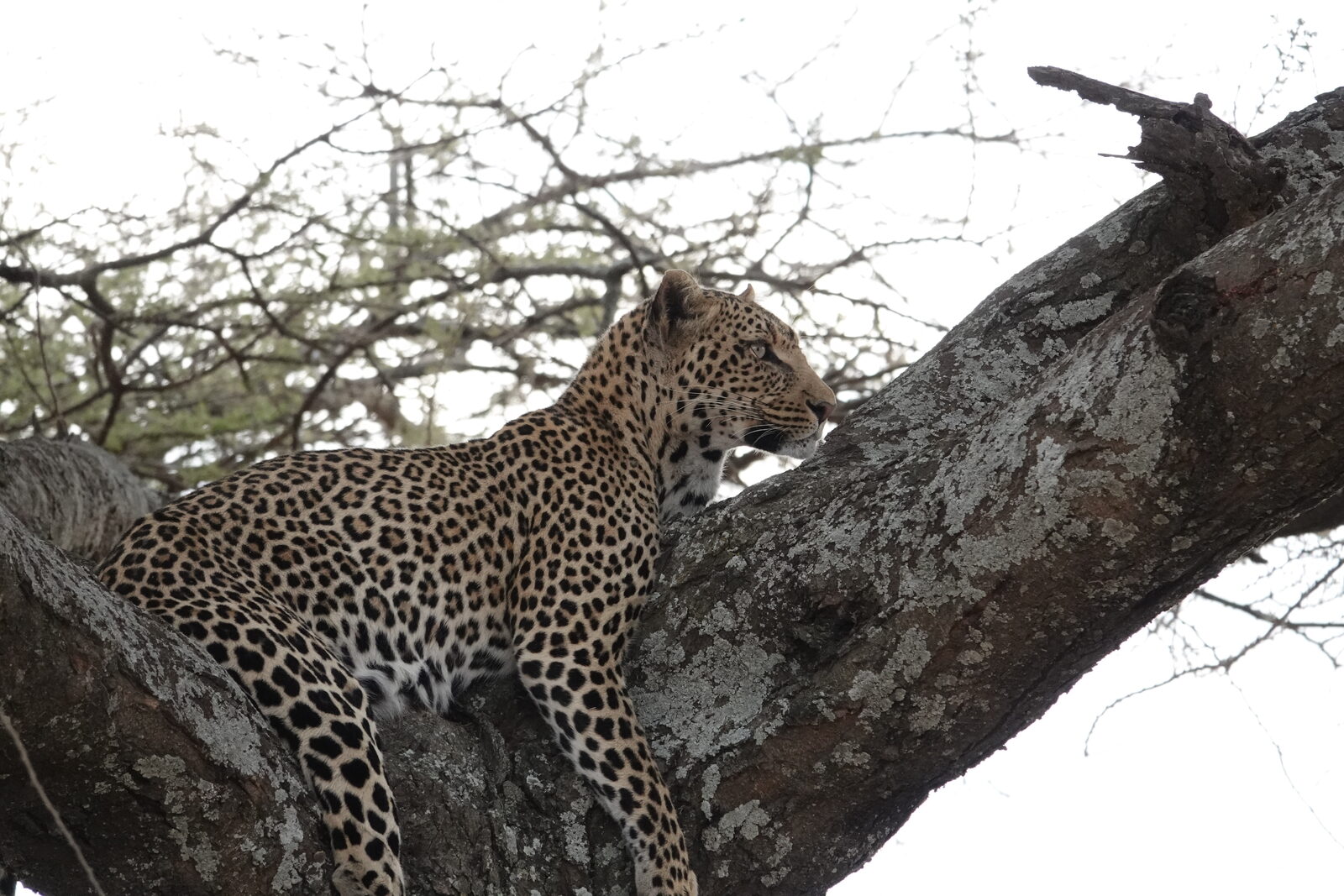
On our first afternoon we found a leopard draped over an acacia branch, the classic shot everyone wants and almost no one gets on the first try.
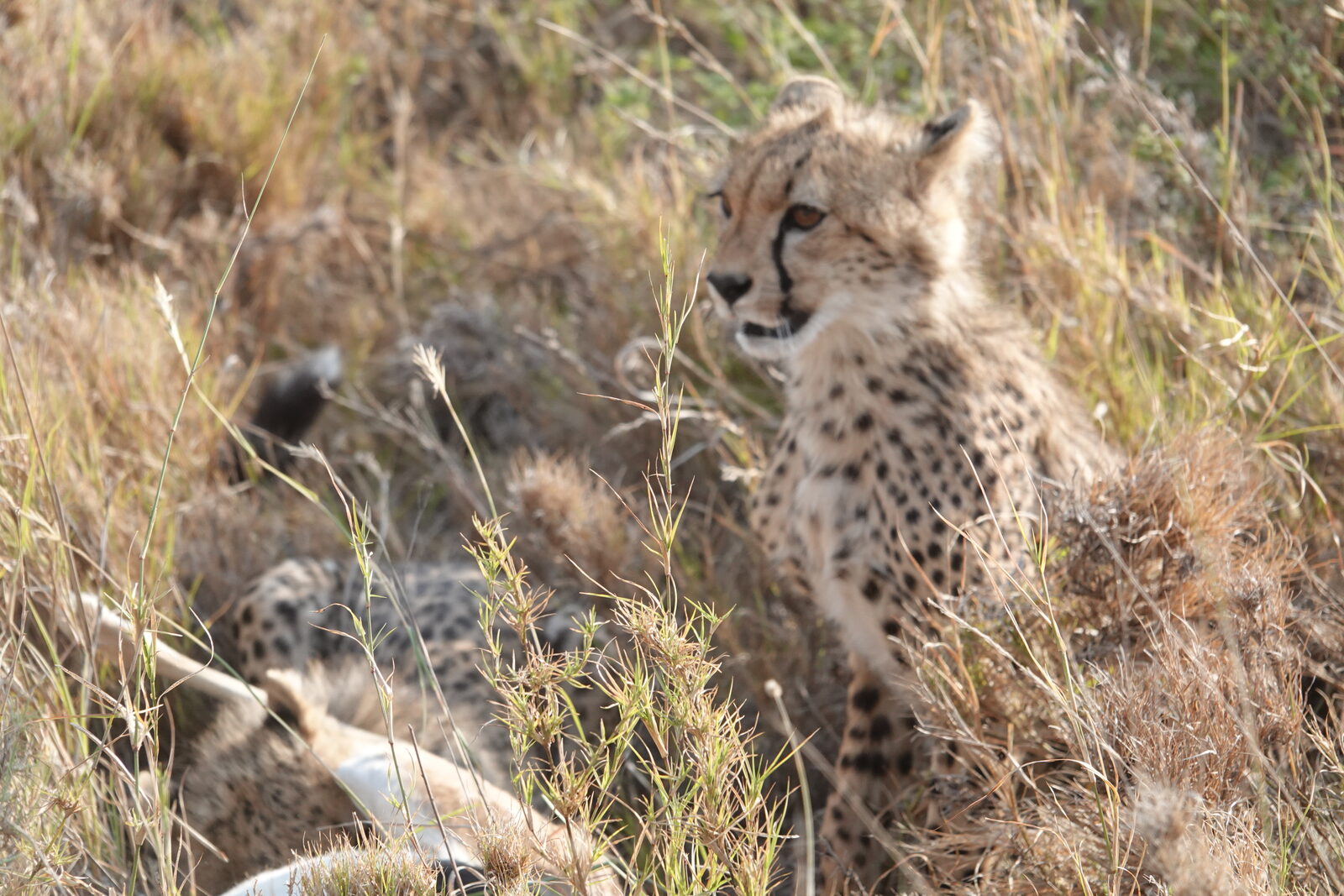
Then we watched a mother cheetah track a gazelle across the plains, pounce on it, kill it and bring it back to her cubs. How did our kids take it? They did OK. We’d already talked about how all animals need to eat, and the boys have a soft spot for cubs, so they were cheering for the cubs to get their dinner. The grace of a cheetah is so different from the brute force of a lion: she speeds up silently, pounces, and it’s over without any drama.
Then there are the sundowners. You’re out in the middle of the savanna, where you’ve just watched lions gather on huge rock formations, and suddenly you pull up to one of those rocks and there’s a bar set up like a fancy hotel bar: tablecloth, olives, cherries, ready to mix whatever drink you want. Except you’re not in a New York hotel. You’re still out in the savanna. It’s absolutely surreal. The juxtaposition is so unexpected, and yet so beautiful. (They do the same with lunch, but I won’t ruin that surprise.)
Room setup for families: the family tent was already booked, so we took two tents, my husband with one son and me with the other. We split up the same way at Ubuntu, and it worked out fine. (If you want the whole family in one tent at these camps, book 18 to 24 months ahead.) You spend most of the day on drives and eat together, so you’re only apart while you sleep. The bonus was two bathrooms, each with an indoor and an outdoor tub. While the boys hung out with him, I had a bath in my outdoor tub, staring out at the Serengeti plains. Everything at Namiri is taken to the next level, and I have zero regrets.
Northern Serengeti: Ubuntu Migration Camp (3 nights)
Talk about leaving the best for last. Ubuntu was not the fanciest of our camps, and yet Asilia suggested we go there last. Now I know why.
Ubuntu sits on the Lamai Wedge, north of the Mara River, from June to November. Most northern Serengeti camps are across the river in Kogatende, and the sightings there draw lots of vehicles. The Wedge has only a handful of camps. It’s remote, less crowded and wilder. You hear lions at night and see elephants walking through camp. I strobed my flashlight in every direction on the walk to dinner. My kids thought it was hilarious. I was trying to survive.
Our guide picked us up at the airstrip, asked if we were all belted in, and raced us to the river because the herds were gathering. Day one: two hours of watching thousands of wildebeest refuse to go first. Day two: within 30 minutes, the herd went, crossing toward us and climbing the bank all around our vehicle, with 6 to 8 vehicles on our side and 80 to 100 lined up on the other. Then a second crossing at the rocky, crocodile-filled crossing points, where one of the boys yelled, “Mom, he got him!”
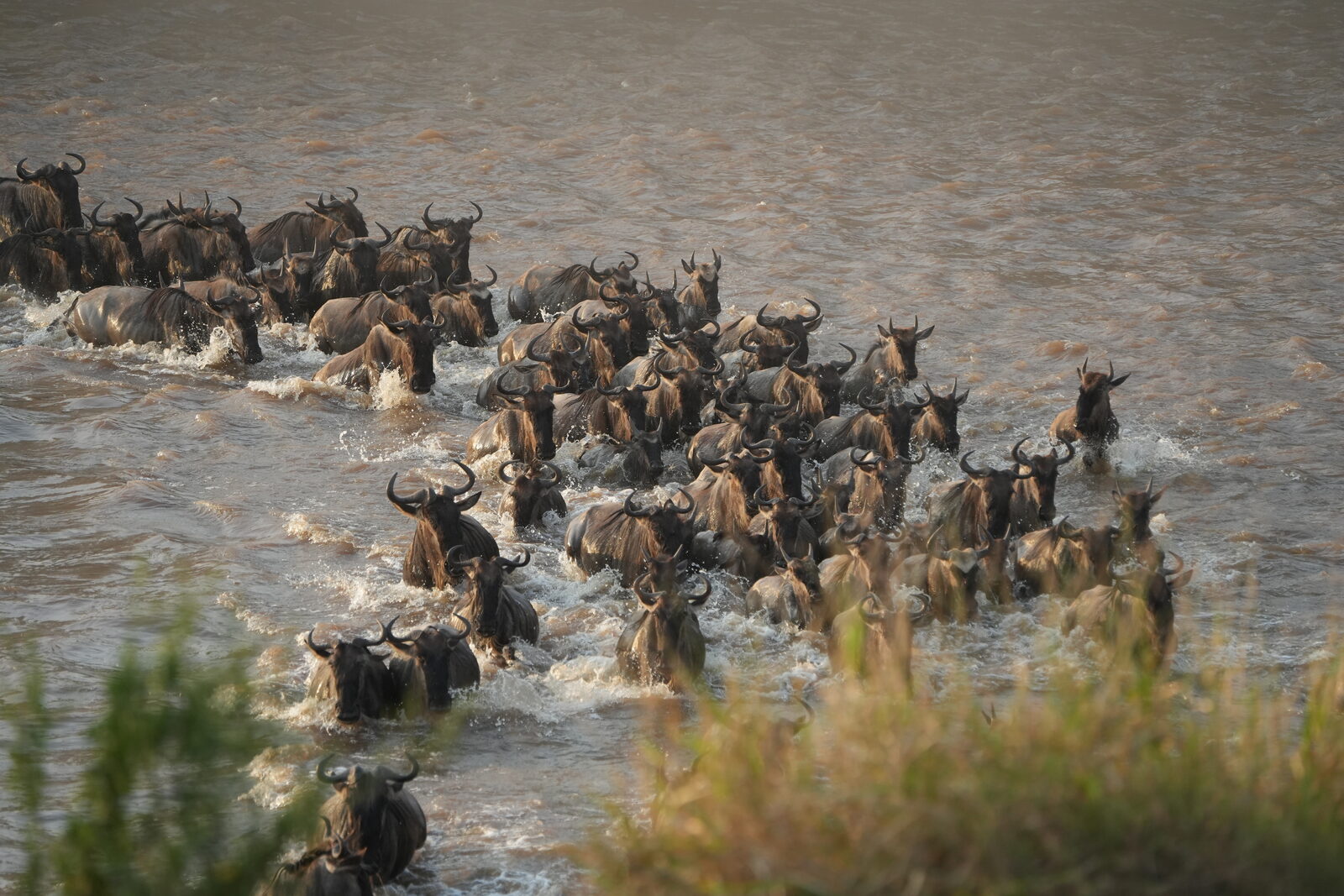
We had seen a crossing in the Masai Mara earlier in the trip, from higher up and farther away. I didn’t know what I was missing until Ubuntu. The whole story, and how to give yourself the best odds, gets its own post.
What I’d tell any family planning their first safari
Book a private vehicle. We had our own vehicle and guide at every camp. With kids it changes everything: you leave when they’re done, stop when someone needs a bathroom, and stay with the cheetahs as long as you like.
Two or three nights per camp. Three is better, especially where you’re waiting on nature: our first afternoon at the river produced nothing. One-nighters with kids turn the trip into packing.
Start with a touch of luxury. After 45 hours of travel, beginning at JW Marriott, the fanciest tents of our trip, was a soft landing before the simpler camps. That’s a personal preference, and I’m happy to plan it either way.
Pack for the smallest plane. Your whole trip lives in one soft duffel, 15 kg on the smallest planes we took.
Talk to your doctor early. As an infectious disease doctor, I’d call this a fairly safe trip. I’d take malaria prophylaxis, drink only bottled water, and get your standard vaccines, including hepatitis and typhoid. If you’re crossing into Tanzania from Kenya, as we did, Tanzania technically requires a yellow fever vaccination certificate. Nobody checked ours, but carry it anyway. Going the other direction, from Tanzania into Kenya, you don’t need it. This is general information, not medical advice; talk to your own doctor.
Prepare your kids for what they’ll see, and agree on the no-squealing rule before the first game drive.
The Safari with Kids series
This post is the overview. Over the next few weeks I’m going deeper on the questions families ask me most:
- Where to watch the Great Migration river crossing, and why we chose the Lamai Wedge
- How to prepare your kids for safari
- Kenya to Tanzania: the border day and visas, step by step
- Masai Mara with kids: the reserve or a conservancy?
- The safari bookings you need to make a year ahead
I’ll link each one here as it goes live. If you’d like each one in your inbox, sign up at the bottom of this page.
Should you go?
If you’ve read this far, you’ve stuck around for a lot. Thank you! A few final thoughts, as a mom, a physician and a travel advisor.
As a mom, I can’t think of a better vacation to share with my kids. People will always debate the perfect age for safari, and honestly it depends on the kid. Ours were 9, well-traveled, good at following directions, and raised on nature documentaries. It was the perfect trip for them at that age. The older teens we saw on safari seemed more bored and more glued to their screens than our boys, and I can see how hours of waiting for a crossing would drive a very young child nuts. A year later, the boys still talk about the animals: the cheetah mom hunting and teaching her cubs, the lions feasting, the many incredibly beautiful birds. One warning: it has forever ruined zoos. When I offered to take them to one this year, they told me, “Animals belong in the wild, not in a zoo. There isn’t anything we will see there that we haven’t already seen.” Touché, kid. Touché.
As a doctor, this is a fairly safe trip with the right preparation.
As a travel advisor, I’ll be honest: this is not a cheap trip. Not at all. You can make it more affordable by going for fewer nights, traveling in the off-season, choosing simpler camps, or driving between camps instead of flying, and I’m happy to talk through all of those. Safari comes in all shapes and sizes, and we should find the one that fits your budget. But if you want to be there at the perfect time for the migration, in one or two tents at a small camp with only about ten of them, without spending your days on the road between camps, the cost adds up. Some things in life are priceless. The photos, memories and experiences we came home with can’t be replicated, and I’m not sure any vacation will ever live up to it.
If it’s something you’re curious about, tell me your kids’ ages and the month you’re hoping to go. If it looks like a fit, I’ll set up a free 20-minute safari call and tell you which side of the border I’d put you on, and which camps I’d book first.
Full disclosure: I can book these camps for clients, along with many others. Everything in this post comes from our own family trip.